
How to Stop Birds from Hitting Windows
Affordable, effective bird-safe solutions for every home—without affecting your view.
Before You Buy Bird-Friendly Window Treatment
There are many attractive and affordable options to stop birds from hitting windows at your home or cottage, without affecting your view. Before buying or DIY-ing your bird-friendly window treatment to stop birds hitting windows, consider these four tips.
-
Markers on glass that are spaced more than 5 x 5 cm apart will not provide sufficient coverage and birds will likely continue to collide with the glass. For products that only provide a small number of pieces in each package, it may be necessary to purchase multiple units to achieve adequate coverage.
-
Visual markers to prevent birds from hitting windows must meet the following criteria to work effectively:
Glass Surface
Visual markers must be on the first (exterior) surface of the window.
Density of Marker Pattern
There must be no more than 2 inches between visual markers.
Marker Coverage
Visual marker patterns must cover the entire surface of the window.
Marker Contrast
Visual markers must be in high contrast to the window surface under varying daylight conditions (sun, overcast, shading, etc.).
Size of Marker
Visual markers must be a minimum of 6 mm in diameter for individual elements or 2 mm wide by 8 mm long for linear elements.
-
Exercise caution when selecting ultraviolet (UV) treatments. FLAP Canada generally recommends choosing alternatives to UV treatments due to gaps in knowledge, identified through research, about the performance of these applications. These gaps include the following:
the effectiveness of UV treatments is reduced in the absence of direct sunlight, such as in overcast conditions or on north facing or shaded sides of buildings.
some bird species that are vulnerable to collisions with glass, such as owls and certain raptors, have limited to no sensitivity to ultraviolet light.
to perform effectively, ultraviolet treatments should reflect 20-40% of light in the range of 300-400 nanometer wavelengths per CSA A460.
like all bird collision deterrent markers, UV coatings must be applied to the first surface of glass; however, these UV coatings degrade relatively quickly due to exposure to the elements.
-
Some collision deterrents come with a post-installation warranty. FLAP Canada recommends choosing products that offer reasonable durability and longevity.
-
Consumers in Canada should be advised of consumer protection legislation that may be applicable in cases where products are being misrepresented or falsely advertised as having a desired effect (e.g., effectively preventing bird collisions) that is not adequately provided.
Visit Consumer Protection Legislation in Canada or Your Rights under the Ontario Consumer Protection Act for more information about rules for advertising that apply to bird collision deterrent technologies, and how to file a complaint with authorities.
Bird-Safe Window Options
-
![Decorative film in criss-cross pattern applied to exterior home window for bird-safe window treatment]()
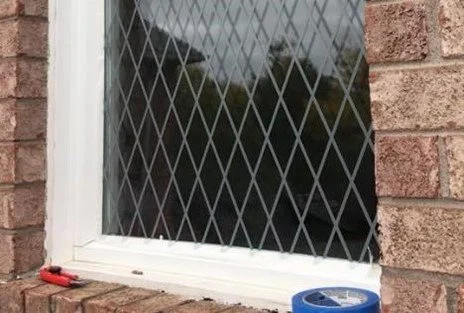
Decorative and Privacy Window Films
Frosted or decorative window films can be an attractive addition to your windows, while also helping birds to avoid a deadly collision with glass. Wallpaper for Windows is one company which offers an assortment of decorative window films. Look for a design that meets FLAP Canada’s Guidelines for Visual Markers or contact your local signage company. They may be able to do custom designs to create an attractive and bird-safe treatment.
-
![Window on exterior of house treated with CollidEscape perforated window film]()
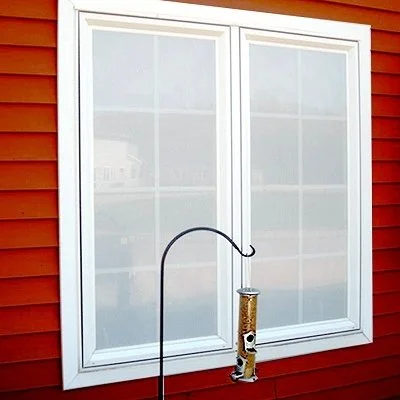
Perforated Window Film
Perforated window film creates an opaque surface on the outside of the glass that looks like a solid barrier to birds. However, the thousands of small perforations in the film let in ample light and permit a view of the outdoors from inside your home. These types of products come in a wide variety of colours and can be custom-printed with images. To keep birds safe, avoid using transparent (‘clear’) products. Although there are many perforated window films available, CollidEscape is one product marketed specifically to stop birds hitting windows.
-
![Window grilles applied to exterior home window for method to stop birds from hitting windows]()
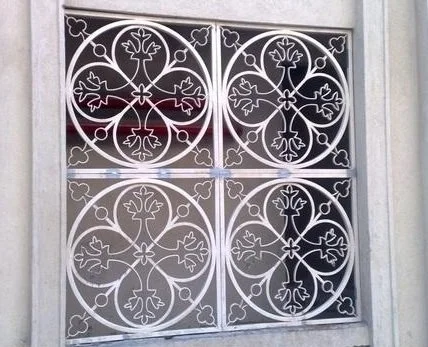
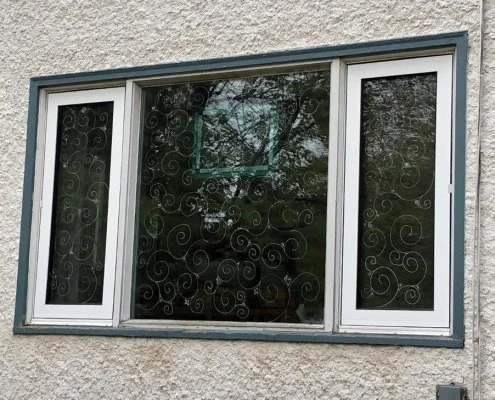
Window Grilles
Decorative or security window grilles on the outside of the window can appear as a barrier for birds to avoid. For best results, assure that the bars or patterns do not leave gaps greater than 5 cm or 2 inches.
-
![Exterior shades applied to residential or home window as way to stop birds from hitting windows]()
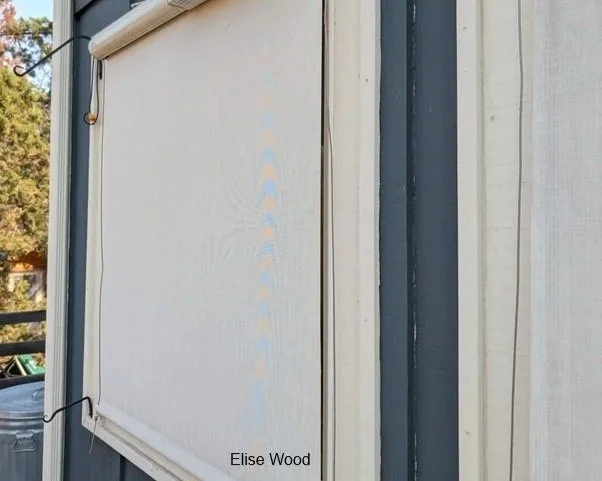
Exterior Shades or Solar Screens
Motorized or permanently fixed solar screens or shades that cover the outside surface of the window are another way to stop birds from flying into windows, while also offering privacy and climate/lighting control. However, they may affect your view and they will only prevent birds from hitting windows when drawn.
Please note that drawing interior curtains or blinds is not an effective approach to prevent birds from hitting windows, because it does not address reflections on the outside surface of the glass.
-
![Exterior window screens applied to cottage window exterior to prevent birds from hitting windows]()
Exterior Window Screens
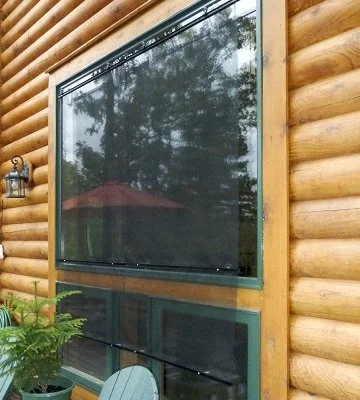
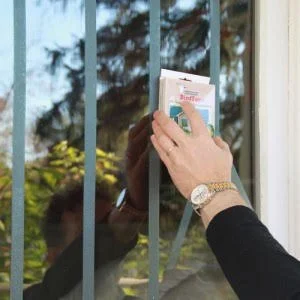
The product Bird Screens is a special window screen that you mount on the outside of your window. The purpose of the screen is to form a flexible barrier between birds and the glass to soften the impact and reduce the chance of injury if a bird does fly towards the window. Regular exterior mounted window screens may also provide some level of protection, but there is still a chance of injury if the screen is mounted too close to the glass or is too taut.
-
![String installed as bird prevention method for windows outdoors at residential home]()
Ribbons or String
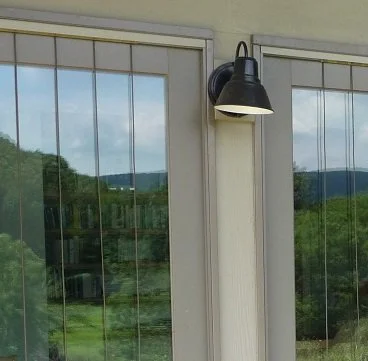
Ribbons or string hung on the outside of the window can be an effective collision deterrent if they are spaced no more than 10 cm (4 inches) apart and run the entire length of the window. Consider spacing the strands even closer at 5 cm (2 inches) to meet FLAP Canada’s Guidelines for Visual Markers. You can order this type of product custom-made for your windows, or you can easily make your own.
-
![CollidEscape tape applied to exterior residential window as bird window collision prevention method]()
Tape
You can make your window look like a barrier to birds by applying lines of tape across the outside surface of the window. To be most effective, do not leave any gaps of more than 5 cm (2 inches) between the strips of tape. You can buy special rolls of tape intended specifically for the purpose of stopping birds from hitting windows (but do not use ‘clear’ products).
-
![Feather-Friendly Tape applied to exterior window of home for bird-safe window treatment]()
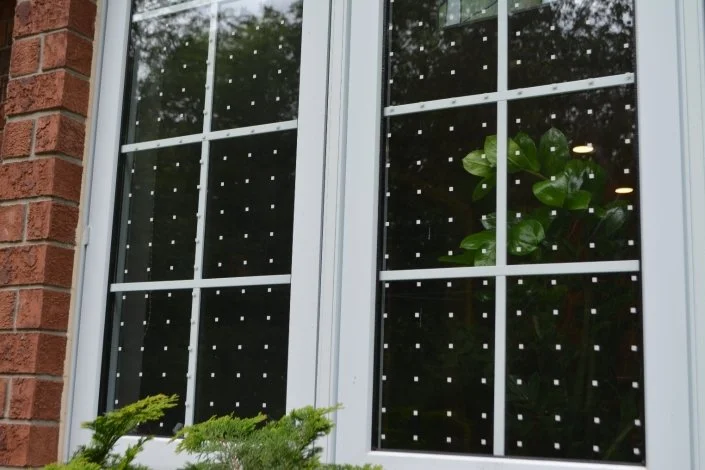
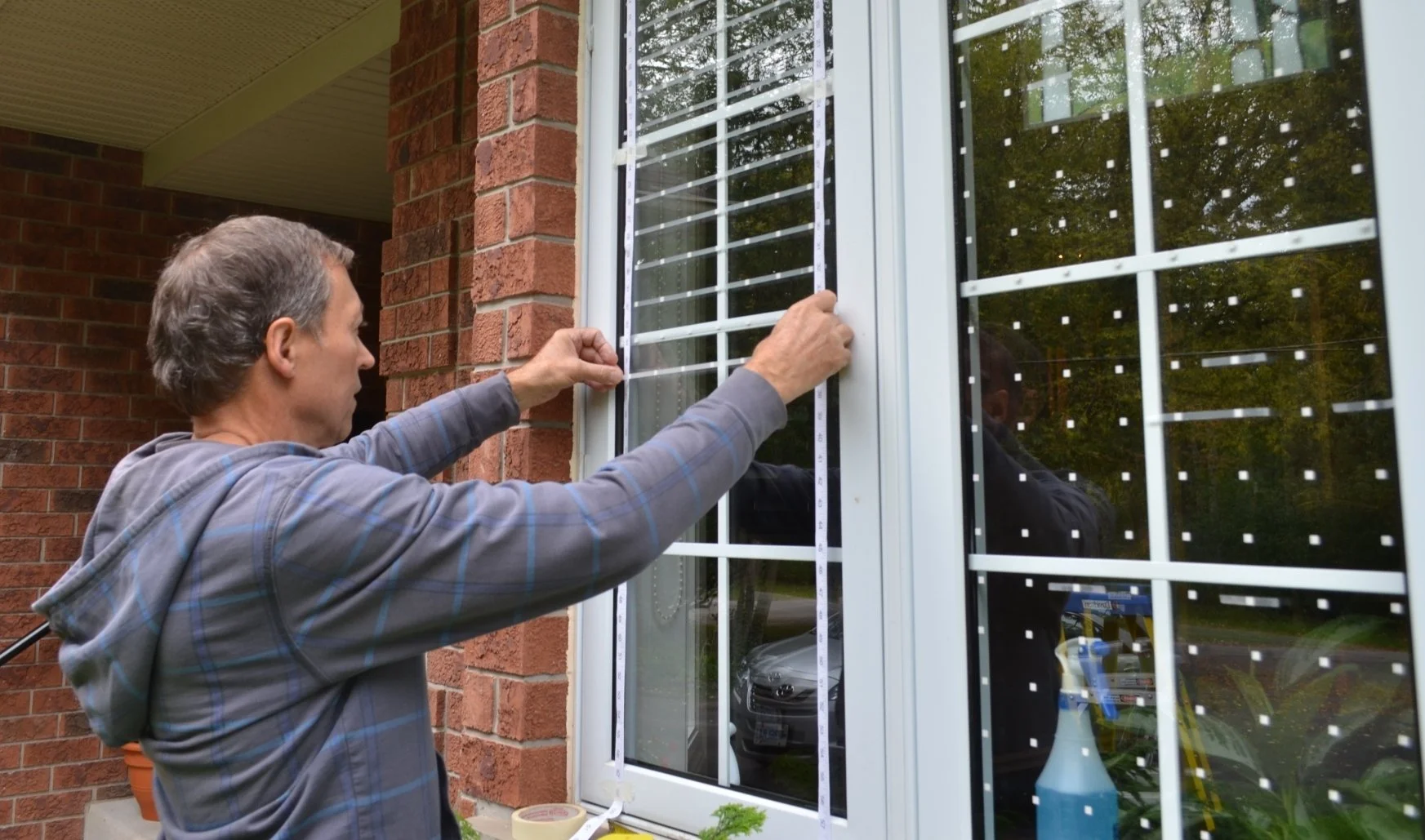
Feather Friendly Tape
Feather Friendly DIY tape leaves rows of white dots on your window so birds will understand a barrier is present. When installed according to the instructions, this product can be very effective at preventing window collisions. You can order Feather Friendly DIY Tape online, or purchase at many Wild Birds Unlimited and Lee Valley stores.
Read our how-to guide about how to install Feather Friendly Tape to stop birds hitting windows.
Need help installing Feather Friendly on your home windows? Consider contacting your local window cleaning company or handyperson.
Temporary DIY Bird-Safe Window Options
-
![Patterns applied with blue tempera paint to exterior of house window for bird-safe collision prevention treatment]()
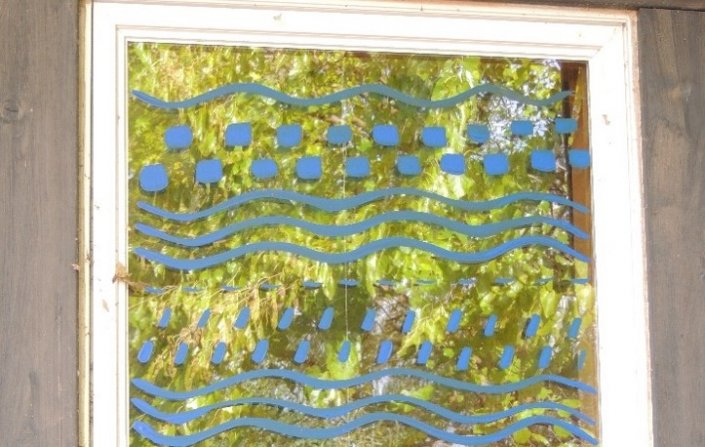
Patterns with Tempera Paint or Paint Pens
Treat your windows like a canvas and be artistic! Draw or paint your own unique patterns on the outside of your window, making sure not to leave any gaps greater than 5 cm or 2 inches. Watch our how-to video on preventing window strikes using washable tempera paint or using oil-based paint pens.
-
![Soap applied as bird-safe window treatment to exterior home window]()
Soap
A bar of soap is the ultimate quick fix. Draw patterns on the outside of the glass with the bar and reapply as needed to stop birds hitting windows. Check out our how-to video.
-
![Person using paintroller to apply whitewash to exterior windows of greenhouse for bird collision prevention]()
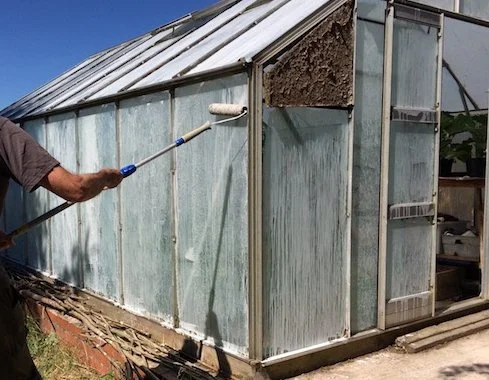
Whitewashed Windows
Whitewashed windows will appear as a complete barrier to birds. This method also provides privacy and prevents a building from overheating, while still allowing light in.
Bird-Safe Solutions for Replacement Windows and New Builds
-
![Interior shot looking out through windows with acid-etched patterns for bird-friendly solution]()
Frit and Acid-Etched Patterns
Ceramic frit and acid-etched patterns that meet FLAP Canada’s Guidelines for visual markers can be an attractive and effective option to stop birds from flying into windows. Certain treatments may serve additional purposes of providing privacy or reducing the transmission of light and heat.
-
![Bathroom window facing outside with frosted glass bird-friendly solution treatment]()
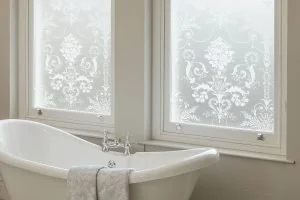
Opaque and Frosted Film
Full-coverage opaque and frosted film are potential options to reduce the risk of window collisions, provided the outside surface of the glass is treated. If you are applying frosted patterns to glass, assure they meet FLAP’s Guidelines for visual markers. You must look for an exterior film in order for this to be an effective bird-safe solution. However, you should keep in mind that glass with a frosted exterior surface can be a bit difficult to keep clean.
-
![Feather-Friendly Tape applied to exterior window of home for bird-safe window treatment]()
Window Muntins
Muntins are metal or wood dividers in a window that separate panes of glass. Windows can be custom created with closely spaced exterior muntins, but generally these are spaced no closer than 6 x 6 inches. Although 6 x 6 inch spacing does not meet FLAP Canada’s Guidelines for Visual Markers, it may provide better protection than a completely untreated window. To make it most effective, you should still add additional visual markers between the gaps.

Bird-Safe Window Marker Guidelines
Visual markers applied to or in front of glass are required to help make windows visible to birds.
-
Visual markers to prevent birds from hitting windows must meet the following criteria to work effectively:
Glass Surface
Visual markers must be on the first (exterior) surface of the window.
Density of Marker Pattern
There must be no more than 2 inches between visual markers.
Marker Coverage
Visual marker patterns must cover the entire surface of the window.
Marker Contrast
Visual markers must be in high contrast to the window surface under varying daylight conditions (sun, overcast, shading, etc.).
Size of Marker
Visual markers must be a minimum of 6 mm in diameter for individual elements or 2 mm wide by 8 mm long for linear elements.
-
FLAP Canada follows the Canadian Standards Association A460 Bird Friendly Building Design Standards for minimum specifications to treat glass for reducing bird collisions. We recommend that all manufacturing, marketing and applications of bird collision deterrents should conform to this standard. To do so, collision deterrents must provide sufficient visual markers (e.g., decals) in each package, as well as instructions and depictions of applications that align with CSA A460 specifications for markers to be spaced no wider than 5×5 cm apart to cover the entire surface of glass.
-
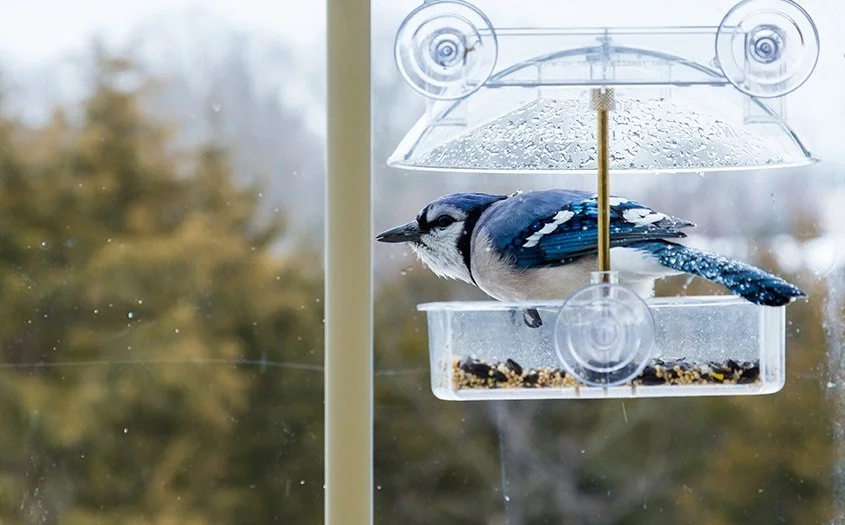
If you feed birds, move your bird-feeder (and other bird attractants like bird baths) as close to the window as possible (half a metre or closer). If a bird leaving the feeder accidentally flies into your window, it is less likely to build up enough momentum to seriously injure itself over this short a distance.
Stop Birds from Hitting Your Windows
Certain windows pose a greater threat to birds than others. Help identify which windows are most important to treat first with the BirdSafe® quick DIY-assessment for homeowners.
Testimonials from people living with bird-safe windows
-
"We have always enjoyed feeding songbirds and watching them from our kitchen window. Not so enjoyable was having birds colliding into the very window that allowed us to observe them. In some unfortunate cases a bird would not survive the collision. Since installing Bird Dots on our window we have eliminated these collisions and fatalities. The view to the outside is still clear yet it feels good that we are doing our part to protect the birds we care about."
—Jason H., Waterloo, Ontario
-
"I purchased the CollidEscape High-Performance BirdTape when I started to notice House Finches coming to visit a small feeder I‘d put up on my 13th floor balcony. I didn’t want them to fly into the glass balcony sides that seem to be common in current condo design. The tape was so easy to apply and worked wonderfully. I‘m happy to say the tape is still up 2 years later and still looks brand new. Ultimately though, I took the feeder down because while my balcony was now safe, I saw the birds going to other balconies that weren’t protected and I didn’t want them to get hurt because of me and my "safe" balcony."
—Cheryl R., Toronto, Ontario
-
"Having been involved with FLAP for several years, I felt I should put my money where my mouth was and make my windows bird friendly. I was grateful for the resource material provided by FLAP and after mulling it over, I chose the Feather-Friendly tape from Convenience Group, Inc. in Toronto. The dots have been on my windows almost 6 years. In addition to my own efforts, I‘ve had the windows professionally cleaned 3 times since, with no dots coming loose so far. I have been pleasantly surprised at how rarely I notice the dots when I’m looking out the window."
—Audrey D., Toronto, Ontario