
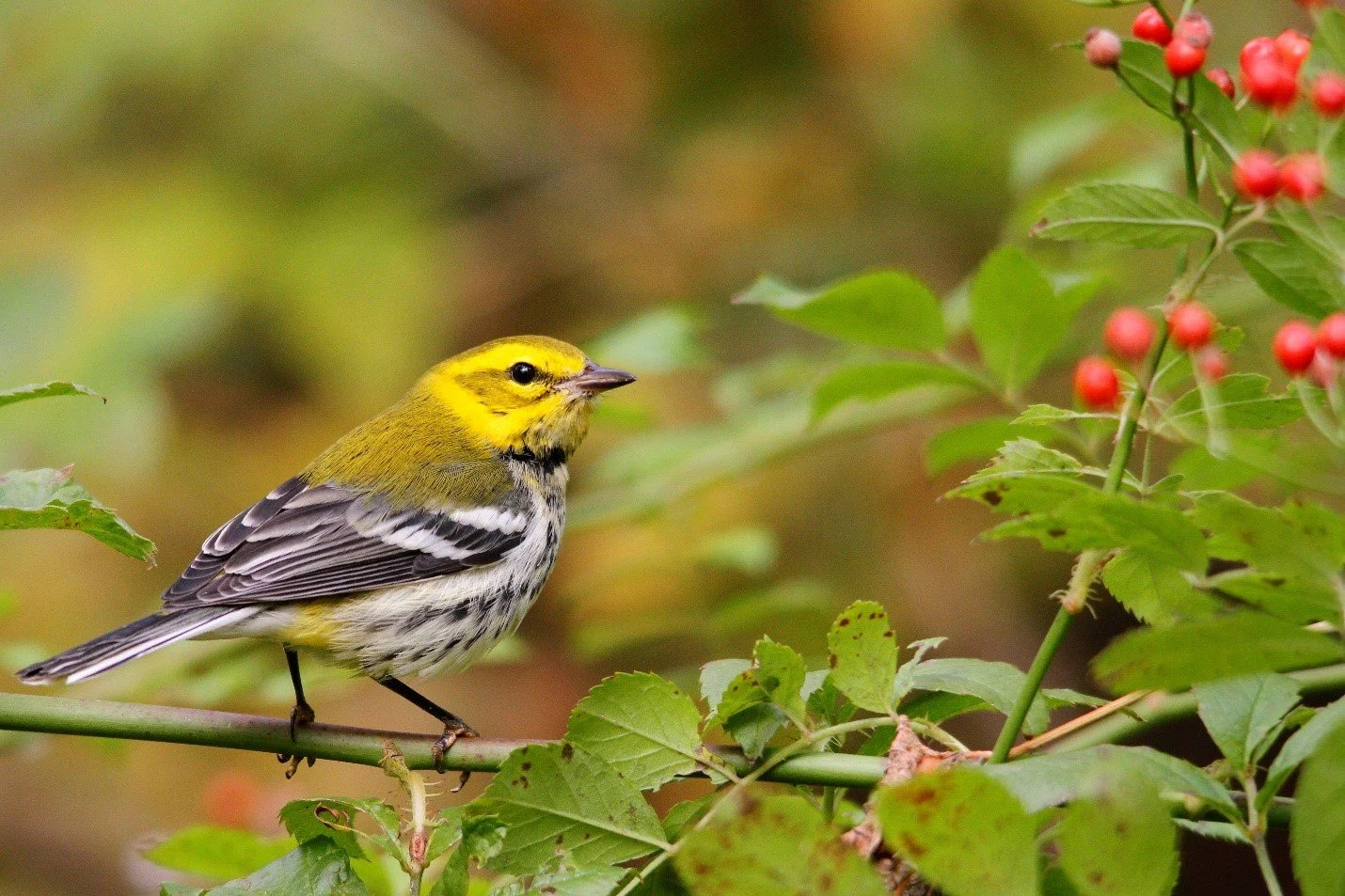
What to Do When You Find an Injured Bird
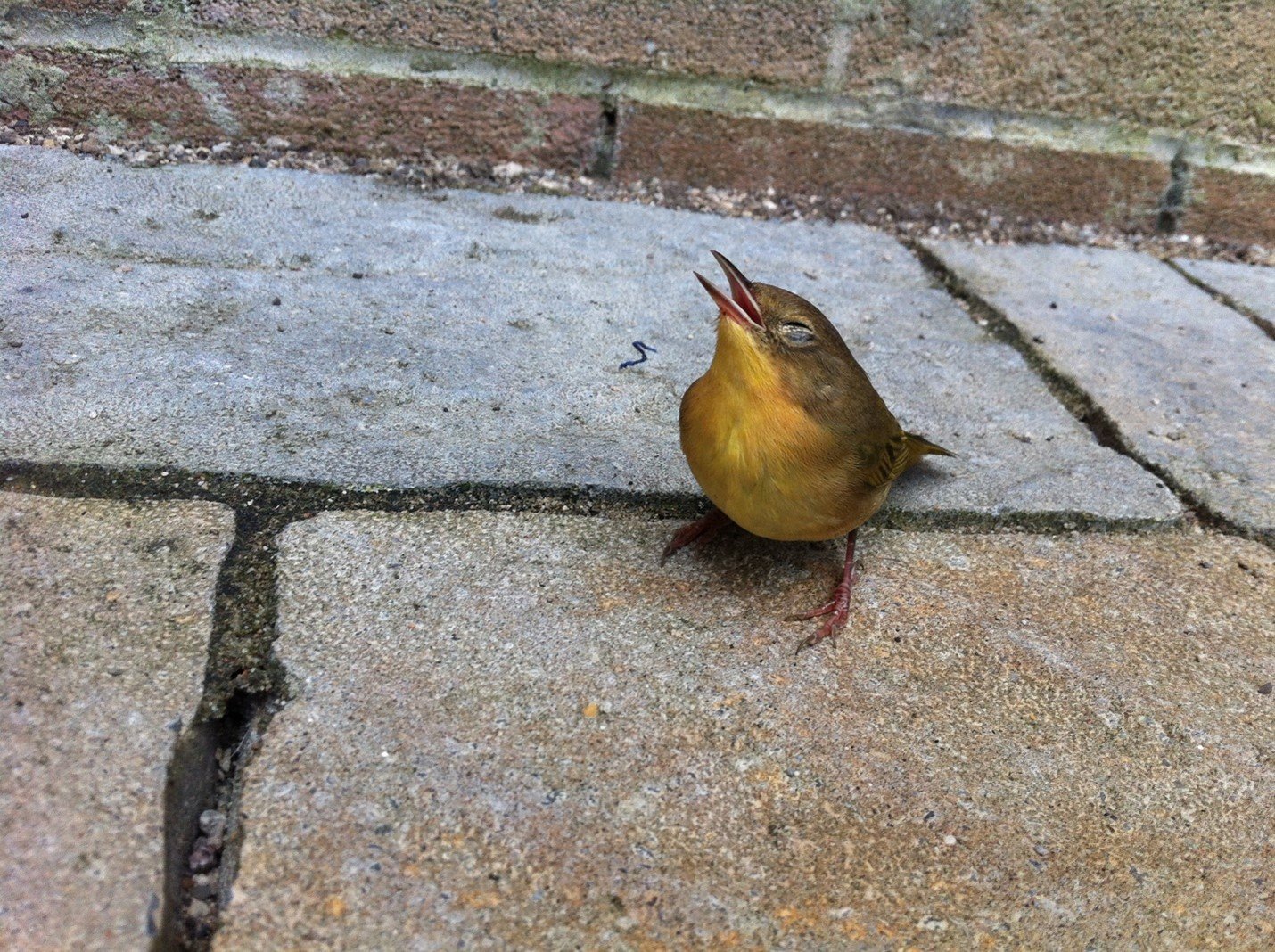
Found an Injured Adult Bird?
Follow these steps to safely help a small injured bird and contact your local wildlife rehabilitation facility immediately.
An injured bird will have the best chance at recovery the faster you get help from a wildlife rehabilitation facility. FLAP Canada does not condone releasing injured wildlife back into the wild before first having the animal assessed by a wildlife rehabilitator.
If the bird is larger than a crow, learn how to safely help larger birds (like ducks, geese, gulls, etc.), or birds of prey (like hawks or owls).
1. Keep the Bird in Sight
If possible, assign someone to watch over the bird as you go to find something to contain it (step 2). Window collision victims are extremely vulnerable to predators and pedestrian traffic. A guardian can keep the bird safe until you return with a suitable container.
2. Find a Container
Find an unwaxed paper bag or a small cardboard box. If using a cardboard box, poke a few small holes in it. There is no need to poke air holes in an unwaxed paper bag. Note that paper bags from fast food restaurants are often waxed and therefore not suitable. Scrunch up a clean, unscented tissue or a paper towel and place inside the bag or box to serve as something soft for the bird to grasp.
3. Gently Pick Up the Bird
Approaching the bird from behind, use both hands to gently cover the bird, being careful not to leave your fingers open so the bird can escape. The bird may vocalize or try to flutter once caught. Expect this and stay calm. Note that small birds are very fragile; you should never close your fingers or hand tightly around their body. It should feel like you are gently holding onto a cotton ball.
4. Place the Bird in the Container
Place the bird upright in the paper bag or box, being careful not to let it escape as you remove your hands. Make sure that the bag or box is securely closed.
5. Keep the Bird Calm
Put the bird in a dark, warm, quiet space, away from children and pets. Avoid interacting with, talking to, and handling the bird, as this will cause it additional stress. Never give an injured bird food or water.
6. Call a Wildlife Rehabilitation Facility
Immediately contact your local wildlife rehabilitation facility.
Birds that have hit windows often have internal injuries that are not obvious from the outside, even if they just look stunned. Your local wildlife rehabilitation facility will be in the best position to advise you on next steps.
Note: if you do not hear back from your local wildlife rehabilitation facility, try contacting another one in your area for advice. Some exotic veterinarians also accept wild birds for emergency care until they can be transported to a wildlife rehabilitation facility.
7. If You Can’t Transport the Bird
If you can’t transport the bird, let the wildlife rehabilitation facility know - they can help explore other options for getting the bird the care it needs.
8. If You’re Told to Release the Bird
If you have been instructed to try releasing the bird by the wildlife rehabilitation facility, take the bird to a wooded area (or other habitat as appropriate for the species) far away from buildings. Before releasing the bird, keep a good distance away from any trees/vegetation so you can assess the bird’s flight. Point the bag/box in the direction of trees and slowly open the top and let the bird fly out.
If the bird does not fly well, try to recapture the bird and reconnect with the wildlife rehabilitation facility.
Did the Injured Bird Hit a Window?
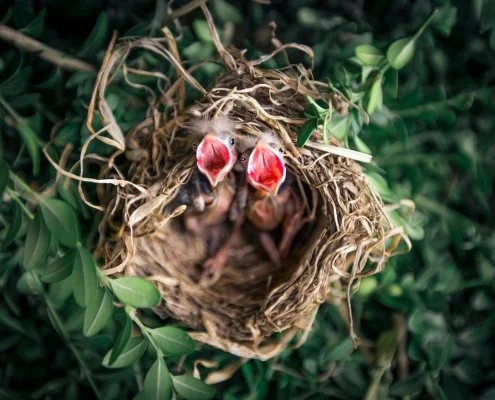
Found an Injured Baby Bird?
If you have found a baby bird, go to helpbabybirds.ca or use the following tips, and contact your local wildlife rehabilitation facility.
Step 1
If you find a featherless baby bird and you know where the nest is, place the baby bird back in the nest. The parent birds will not smell your scent and reject the bird.
Step 2
If you cannot find the nest, make one out of a small container or flowerpot lined with leaves or dry grass.
Step 3
Place the substitute nest close to the area where you found the baby bird, and watch for parents to come back to feed their baby.
Step 4
If the baby bird is fully feathered and has just left the nest, it may be a fledgling on the ground waiting for its parents. The best thing to do is leave the bird for the parents to care for and feed.
Step 5
If you believe the bird is in danger from roaming cats or other predators, place it in a tree or bush where it will be safe.
Step 6
If you are still concerned (perhaps the parents have not returned for a long time) contact your local wildlife rehabilitation facility for advice.
Toronto, Ontario
Wildlife Rescue and Rehabilitation Centres
British Columbia
Wildlife Rescue Association of BC
Ontario listings of wildlife centres authorized by Ontario Ministry of Natural Resources
Ontario Wildlife Centres
United States
Humane World
Canada listings of wildlife rescue and rehabilitation centres
International listings of wildlife rehabilitators
If you need additional advice, please try FLAP Canada’s bird rescue hotline: 416-366-3527.
Please do not email us or contact us on social media about an injured bird.
Keep in mind, we only monitor our bird rescue hotline 7 days a week during bird migration seasons.
Bird migration seasons are mid-March to early June, and mid-August to early November, with the hotline monitored from 7:30 AM - 4 PM, 7 days a week.
Please note, FLAP Canada does not have a wildlife rehabilitation facility.