FLAP Canada Milestones
Some of FLAP Canada's achievements in migratory bird conservation.
1993 - 1999
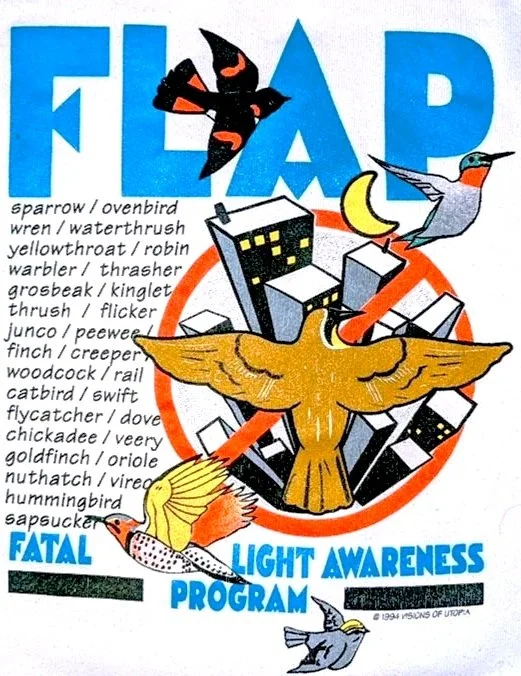
FLAP’s 1994 Logo
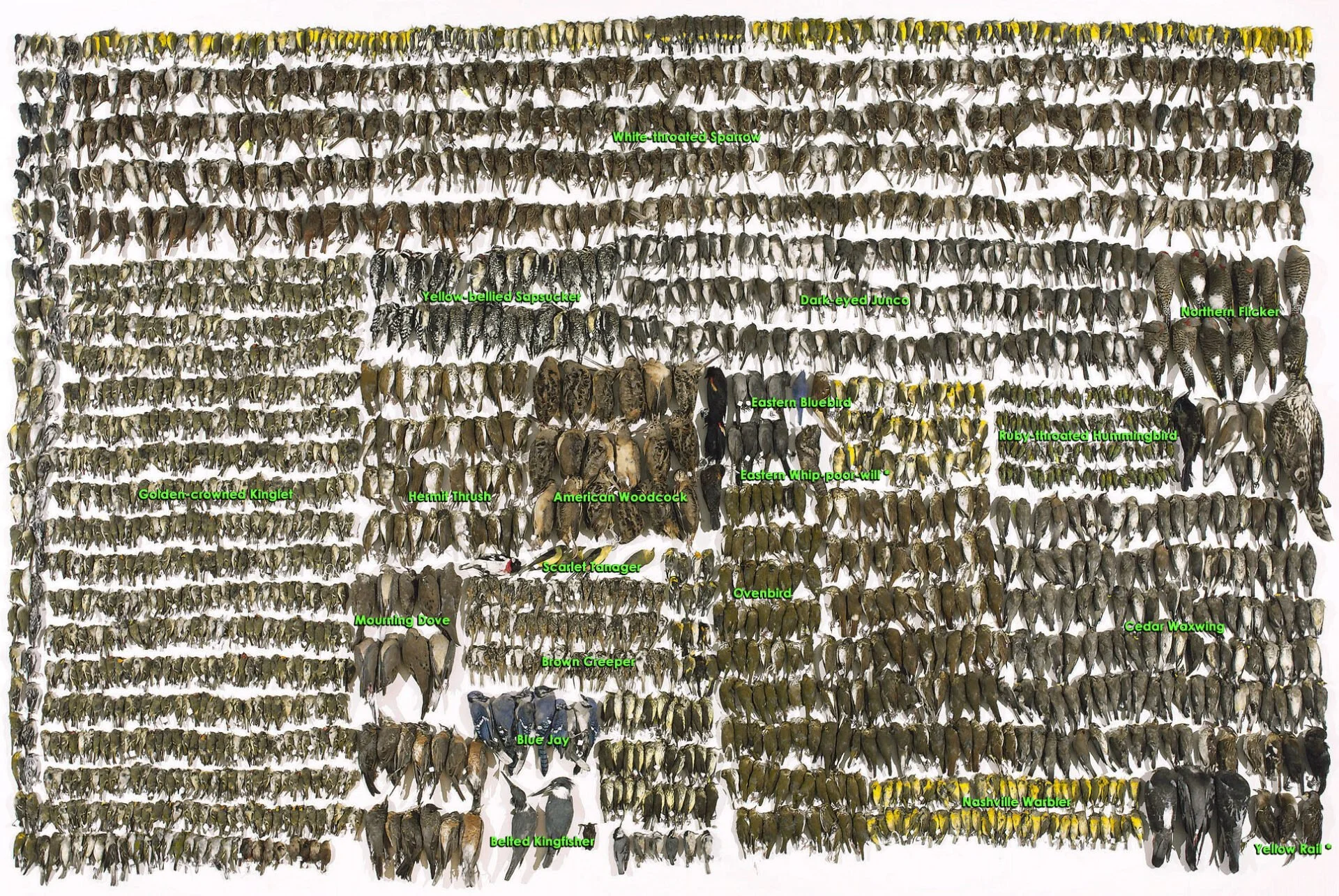
2002 issue of National Geographic Magazine capturing FLAP’s 2001 bird layout
1993
Fatal Light Awareness Program founded in Toronto.
1292 birds documented.
1994
1960 birds documented
Published the first issue of our newsletter, Touching Down.
Developed our first informational brochure.
Compiled a bird-centric Volunteer Training Manual. CBC The Nature of Things covered a story on bird collsiions and the work of FLAP.
1995
1430 birds documented.
Formed partnership with WWF-Canada, leading to partnerships with other bird conservation groups.
1996
1999 birds documented.
Co-published Collision Course: The Hazards of Lighted Structures and Windows to Migrating Birds with WWF-Canada, written by Lesley J. Evans Ogden.
Expanded bird rescue and education to include the daytime window collision issue.
1997
1868 birds documented
1998
1150 birds documented.
2000-2009
2000
2303 birds documented.
2001
3081 birds documented
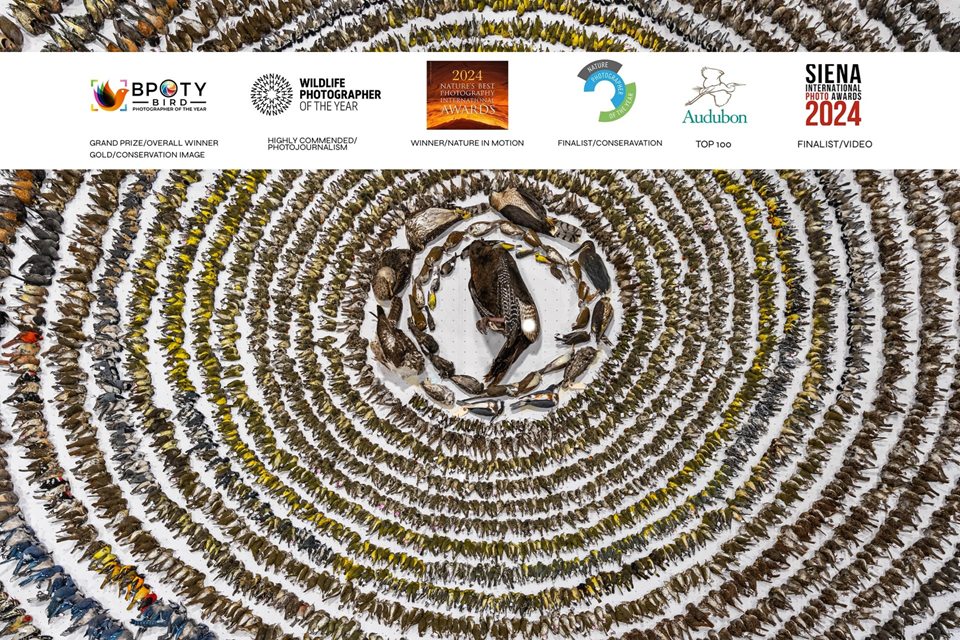
Launched the first Annual Bird Layout — a public display of dead birds recovered by patrol volunteers, featured in National Geographic in March 2002.
2002
4538 birds documented.
Published Effect of Light Reduction on Collision of Migratory Birds by Lesley J. Evans Ogden.
Consulted to help establish Chicago Bird Collision Monitors, an early FLAP-like program.
2003
3246 birds documented
Collaborated with the Royal Astronomical Society of Canada on the Torrance Barrens Dark Sky Preserve.
Supported Brock University’s Dr. John Black's installation of bird radar on the Royal Bank Plaza roof in Toronto as a migratory bird pilot project.
2004
3020 birds documented.
2005
4738 birds documented.
FLAP co-founder Carolynn Parke opened Wingspread, a songbird rehabilitation centre and sister program to FLAP.
2006
5461 birds documented.
Carolynn Parke Memorial Fund established in memoriam to co-founder Carolynn Parke.
City of Toronto launched Lights Out! Toronto, a public awareness campaign to save energy and birds, in partnership with FLAP and 13 other organizations.
2007
3176 birds documented.
Received the Ontario Trillium Foundation's Great Grants Award for Exemplary Volunteerism. City of Toronto, in consultation with FLAP, released the groundbreaking Bird-Friendly Development Guidelines — a world first. Audubon Minnesota consulted with FLAP to create Project BirdSafe in the Twin Cities.
2008
3136 birds documented.
Canadian Urban Institute honoured the Bird-Friendly Development Guidelines working group with its Urban Leadership Award for City Initiatives.
Published Common Birds of Toronto, featuring 10 species commonly found hitting buildings by FLAP volunteers.
2009
3029 birds documented.
Collaborated with Convenience Group to develop the first commercial-grade bird deterrent window film meeting research standards for bird safety.
Partnered with the City of Markham to apply the first bird collision deterrent to a Canadian government building.
Co-hosted the symposium Bird Conservation in Urban Areas with the City of Toronto.
2010-2019

2010
4889 birds documented.
"Ontario Nature v Menkes et al" trial related to hundreds of migratory bird deaths.
Developed BirdSafe® standards for assessing bird-building collision risk levels, with subject experts in architecture, science, ornithology, and city planning.
City of Toronto became the first city in the world to mandate bird-friendly building guidelines.
2011
City of Toronto launched its biodiversity series with Birds of Toronto: A Guide to Their Remarkable World.
2012
3734 birds documented.
"Ecojustice v Cadillac Fairview" trial related to hundreds of migratory bird deaths.
City of Markham worked with FLAP to develop Bird Friendly Guidelines.
2013
2579 birds documented.
After two years of intensive work by FLAP and Ecojustice staff, the Ontario Court of Justice ruled that the provincial Environmental Protection Act and the federal Species at Risk Act apply in cases of bird collisions with buildings.
Collaborated with Environment Canada to estimate the number of birds killed annually by collisions with building windows.
2014
4034 birds documented.
Launched the BirdSafe® building risk assessment system.
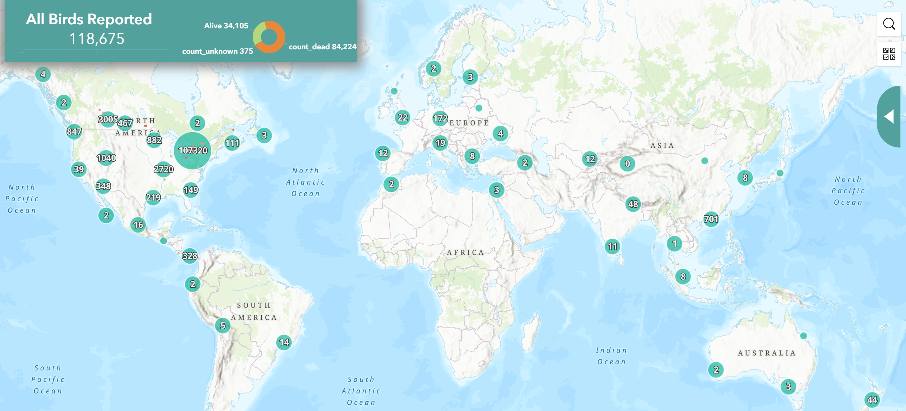
Launched FLAP Mapper, a GIS web app for mapping bird-building collisions, in collaboration with ESRI.
FLAP officially became FLAP Canada.
2015
3069 birds documented.
Ontario Ministry of Environment and Climate Change released its 2014–2015 Progress Report. FLAP Canada, Ecojustice, and Ontario Nature united to challenge the Ministry's decision to exempt commercial structures from the 2013 ruling. Launched the Home Safe for Birds homeowner campaign in partnership with Environment Canada.
2016
4034 birds documented.
Launched BirdSafe® consulting services for the industrial, commercial, and institutional sector.
2017
2865 birds documented.
Assisted Living Sky Wildlife Rehabilitation and the City of Saskatoon in developing bird-friendly guidelines.
Launched BirdSafe.ca.
Conducted BirdSafe® risk assessments on UBC buildings.
Recognized as one of Canada's top 150 icons by Canadian Geographic and The Walrus.
Executive Director Michael Mesure recognized by Environment and Climate Change Canada as one of Canada's top 100 bird enthusiasts.
2018
3790 birds documented.
Invited to join the Canadian Standards Association Technical Committee to develop the Bird-Friendly Buildings Standard.
Met with the Audubon Chapter of Minneapolis and Vikings Stadium authorities to discuss bird collision mitigation for US Bank Stadium.
Launched Global Bird Rescue.
Released the BirdSafe® DIY Building Risk Assessment App.
Won the Canadian Nature Inspiration Award for Not-for-Profit Organization.
2019
3137 birds documented.
Released a reprint of the City of Toronto Birds of Toronto booklet.
Released the CSA Bird-Friendly Buildings Standard (CSA A460:19).
Participated in a North American nano-tagging research project tracking birds released after building collisions.
Launched the Bird-Safe Campus program.
2020
3779 birds documented.
FLAP Canada partnered with Brendon samuals, a graduate student at Western University in London, to design and launch the @BIRDCRASH_BOT, a social media automation tool for tracking bird collisions in real time, all over the world.
FLAP Canada’s years of working with the City of Ottawa to adopt guidelines similar to Toronto’s comes to fruition with the launch of their Bird-safe Building Design Guidelines.
2021
4011 birds documented.
FLAP Canada’s 18 years of data collection, advocacy efforts and partnerships led to the iconic Toronto Dominion Centre completing its major bird-safe retrofit, one of the world’s largest collision-mitigation project.
2022
5481 birds documented.
City of Pickering introduces mandatory performance criteria for bird collision mitigation.
2023
5106 birds documented.
FLAP celebrates its 30th anniversary.
2024
4767 birds documented.
Assist the City of Richmond Hill in the development of its Bird Safe Design Standards.
Helps launch the Bird Collision Prevention Alliance.
Patricia Homonylo won the International Bird Photographer of the Year competition for capturing our "When Worlds Collide” annual bird layout.
2025
5535 birds documented.
The iconic Royal Bank Plaza in Toronto underwent a major bird safety retrofit using Feather Friendly visual markers to stop fatal bird-glass impacts.
FLAP receives Government of Canada contract to assess 340 federal buildings for bird collision risk.
By December, the GBCM has 962 users.
Global Bird Rescue social media reach surpassed 300,000 views.
Global Bird Rescue: 51 participants around the world.
2026
City of Markham updates its Bird-Friendly Design Guidelines to meet the CSA national standard, as well as to be the first to include new low-density residential developments
2020-Onwards
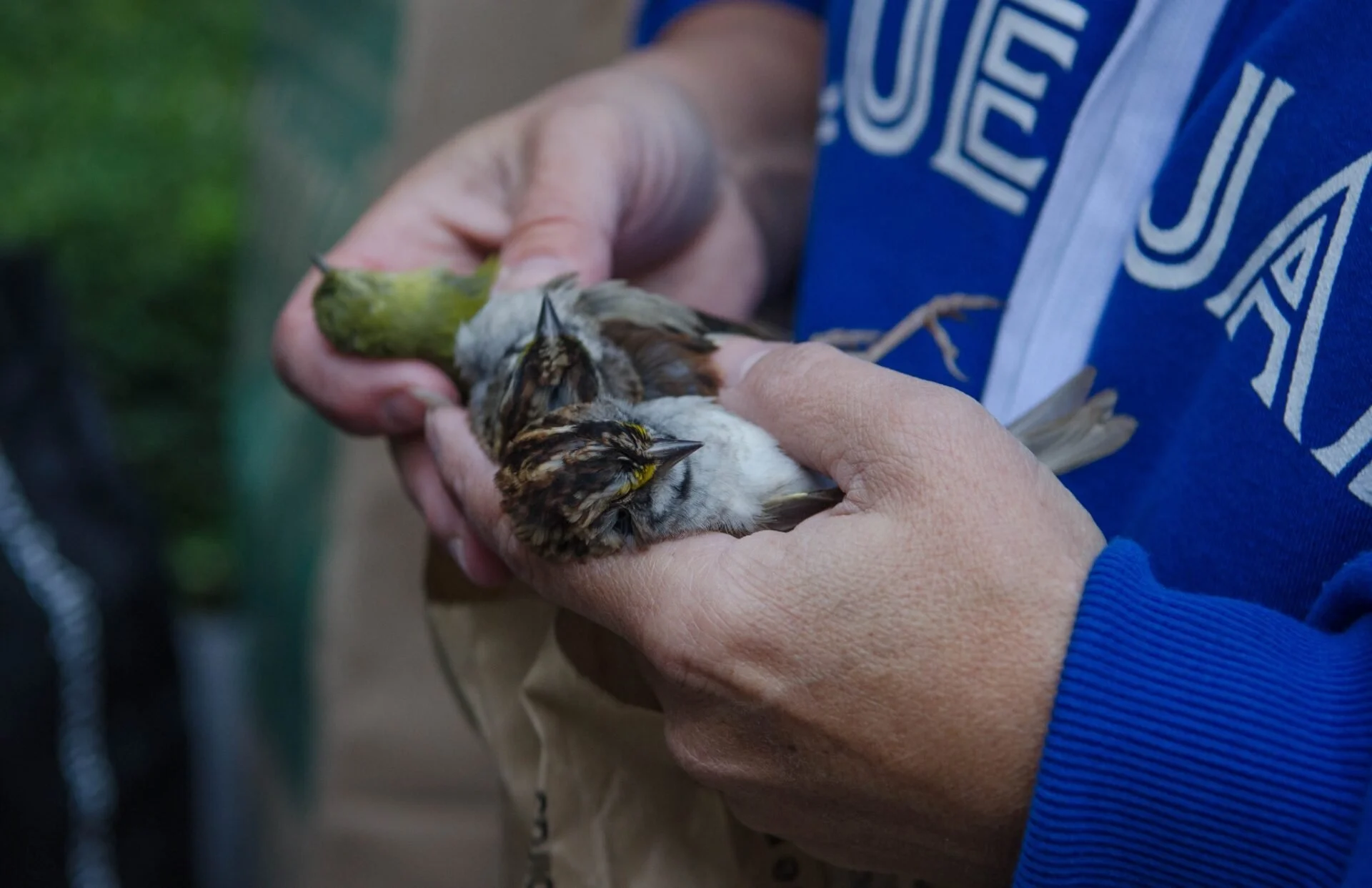
Our work continues. Help us keep birds safe.
Bird-window collisions are a serious conservation issue, but there are solutions. Help support the migratory bird-saving work FLAP Canada does year round.
FLAP Canada In the News