
Frequently Asked Questions
Find answers to common questions about bird-window collisions, window treatments, volunteering, and more.
At Home: Protecting Birds Around Your House
-
The key to stopping birds from flying into your windows is to make the entire window look like a barrier to birds. You can do this by applying dense patterns of markings (small dots, squares, lines, etc.) to the outside of your window. There are many affordable and attractive options to choose from that won’t ruin your view.
Learn how to make your windows bird-safe -
No. A single black hawk silhouette affixed to a window is not effective at all in deterring birds from colliding with a window. The shape of a window decal is unimportant in preventing birds from hitting windows; it is the use of multiple window decals in any shape or colour, applied in a dense pattern that helps make windows visible to birds.
Learn how to stop birds from hitting windows -
According to a 2013 Environment Canada research study, cats kill more than 100 million birds each year in Canada, making them the most significant human-related bird mortality factor.
Keeping your cat indoors saves birds and small wild animals, but it also protects your cat from harm.
Veterinarians, humane societies and animal protection agencies all strongly advocate keeping your cat indoors. An outside cat faces many dangers including: getting hit by moving vehicles, getting lost, being stolen or poisoned, contracting infectious or fatal diseases, and getting attacked by other cats, dogs or wild animals.
Outdoor cats have a considerably shortened lifespan compared to indoor cats.
-
The ideal location for a bird feeder is right up against the window surface, or no more than 0.5 metre (1.5 feet) from the window. This positioning significantly reduces the likelihood of injury should a bird hit the window before or after feeding. The 0.5 metre or less distance does not give birds the opportunity to build up any momentum when they fly from the feeder, but it gives you the opportunity to enjoy watching birds up close.
Learn more about bird-safe feeder placement -
Many people become alarmed or annoyed when a bird taps or pecks at their window in the spring. When a bird pecks at your window, it is fighting what it perceives to be an intruder. The bird doesn’t understand that it is attacking its own reflection; it is simply defending its territory. This territorial reaction may be so strong that the bird exhausts itself or sustains mild abrasions, but the behaviour usually doesn’t result in fatal injury. Both males and females birds may exhibit this behaviour, especially those species that nest close to our homes such as American Robins, Northern Cardinals and Chipping Sparrows. Here are some tips on how to stop birds from tapping at their reflection in your window:
Add temporary newspaper to cover the outside of the window to hide the reflection
Cover the outside of your window with a window screen or fabric to obscure the bird’s reflection.
Shine a lamp out through the window during the day to create a bright glare and mute reflection.
Cover the outside of your window with perforated window film such as CollidEscape.
-
This depends on the decals and how they are applied! We typically say that hawk decals are ineffective, as they are typically applied as one or two decals per window. This simply is not enough to satisfy the window marker guidelines, and are thus ineffective. Hawk decals would be effective if they were applied on the outside of the window, covering the entire window with spaces between decals being no wider than 2 inches.
Visual markers like those produced by Feather Friendly are proven to be 95%+ effective at reducing collisions.
-
You need as many decals as it takes to cover the surface of the window, placing them every 2 inches. The number will vary based on the size of the window you are treating, the product you are using, and how that product is sold.
-
Yes. Typically, windows that exhibit a strong reflection of surrounding habitat, will be more dangerous during the day than those that do not have a strong reflection. Windows that face a green space are also more likely to have collisions as there tends to be more birds around those windows. These windows are also typically lower to the ground within the height of surrounding tree canopy.
At night, windows that are emitting light from inside, are more likely to have nighttime collisions than windows that are dark.
-
Closing blinds may help, but not if there is a strong reflection on the window. As soon as there is a strong reflection on the outside of the window, anything on the inside will no longer be seen. If the window is transparent with no reflection, blinds and curtains will help birds avoid the glass.
This is why visual markers must be placed on the outside of the window to effectively help birds avoid the glass.
Closing blinds at night to reduce your inside lighting from spilling outside, will greatly help with reducing light pollution and will have a positive effect on birds and other wildlife. -
Does your treatment follow these visual marker guidelines:
placed on the outside of the window
highly contrasted to the window surface and reflection
covering the entire window
spaced no more than 2 inches apart
each individual marker is no smaller than 6mm If yes, are the collisions happening at dawn and dusk, or during the day? If the collisions are happening as the sun is rising or setting, inside lighting could be obscuring the contrast of the visual markers making them less visible to birds during this time while it is still a little dark outside. Try closing your curtains during this time.
If birds are still colliding during the daytime, please reach out to us at flap@flap.org. We would love to assess this issue and help you reduce collisions.
-
Bird-safe glass can take on many forms! The most common right now is a white visual marker pattern on the outside surface of the glass, covering the entire window. But there are other options such as exterior screens, hanging paracord, art installations and customized markers.
Bird-safe glass always follows these guidelines:Placed on the outside surface of the glass
Covering the entire window
Spaced no more than 2 inches apart
Each individual marker needs to be no smaller than 6 mm in diameter
and the treatment should be contrasted to the window itself.
Found an Injured Bird?
-
If you have found an injured bird, please follow these steps and immediately contact your local wildlife rehabilitation facility.
-
Follow these tips if you find a baby bird.
Some tiny birds, such as wrens and warblers, look like baby birds even though they are mature. If you find a bird sitting under a window and it does not move when you approach, most likely the bird is an adult bird that has hit the window.
Follow these steps if you find an injured bird.
If you find a featherless baby bird, and you know where the nest is, place the baby bird back in the nest. The parent birds will not smell your scent and reject the bird. If you cannot find the nest, make one out of a small basket or flowerpot lined with leaves or dry grass. Place the substitute nest close to the area where you found the baby bird.
If the baby bird is feathered and has just left the nest, it may be on the ground waiting for its parents. The best thing to do is leave the bird for the parents to care for and feed. If you believe the bird is in danger from roaming cats or other predators, place it high up on a tree branch where it will be safe. If you are still concerned (perhaps the parents have not returned for a long time) contact your local wildlife rehabilitation facility for advice.
-
Birds are much more likely to contract diseases from humans than the other way around.
For this reason, and to protect yourself from any remote health risk, we suggest that you wear hand protection such as latex or vinyl gloves, and wash your hands before and after handling birds.
This is simply good practice when handling any wildlife or unknown plant material or matter the bird may have been exposed to.
Refer to Public Health Agency of Canada guidance in this matter.
-
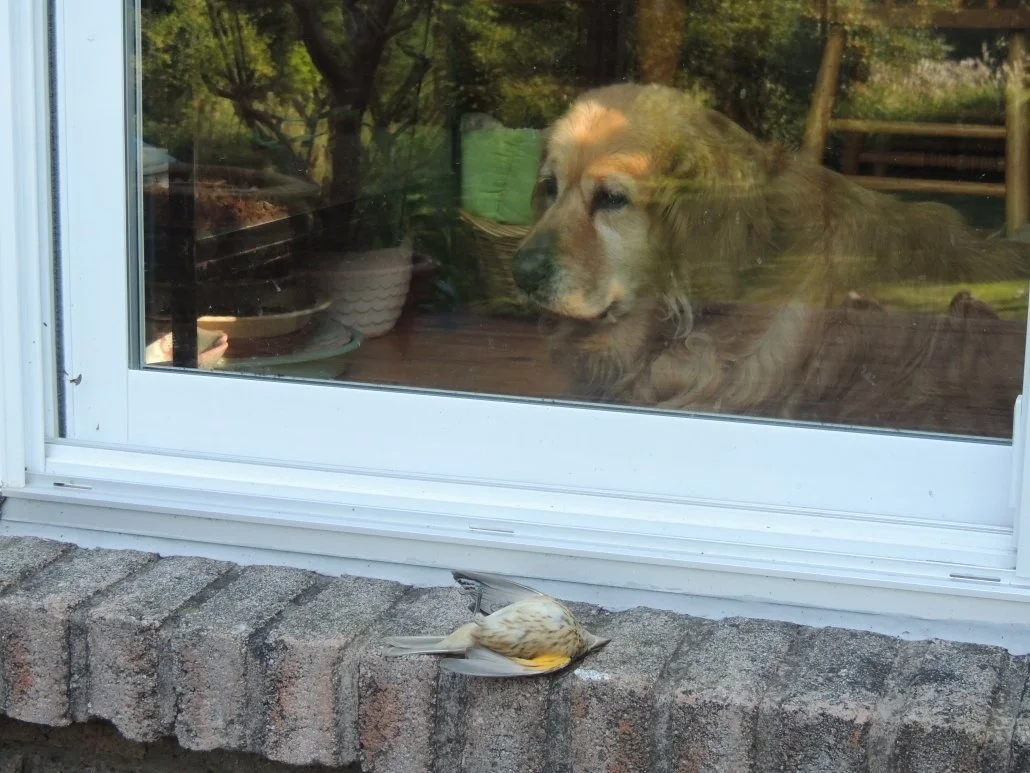
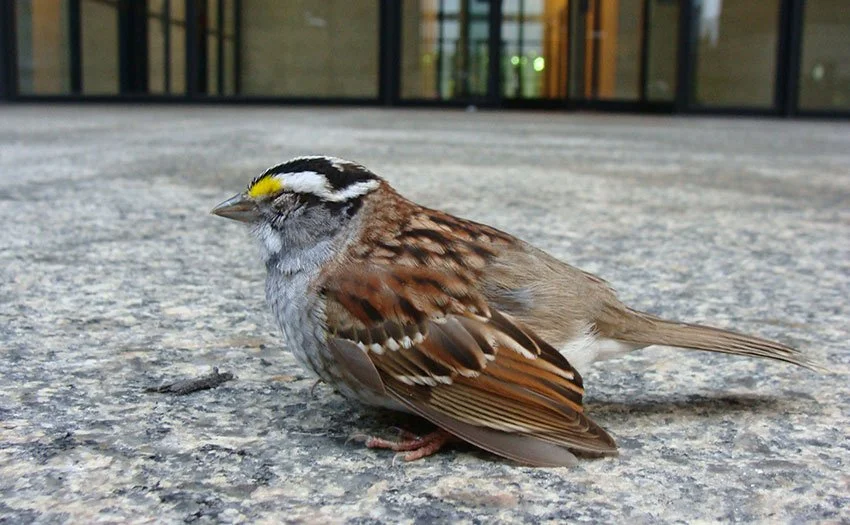
Birds that collide with windows can be very stunned from the impact. We have often found birds on their backs, that look dead, but actually move once picked up. For most live birds, there will be movement, whether in the head, legs/feet or wings once picked up. Live birds for the most part can hold themselves up. Live birds will never be lying on their sides for a long period of time. Keep in mind: Hummingbirds can go into torpor, this is a state like hibernation, where the bird may look dead, but is in fact alive. We recommend putting all hummingbirds in an unwaxed paper bag to see if they recover out of torpor. Another way to tell, is to look at the eyes, if they look sunken, the bird has died.
-
Birds that collide with windows can sustain a huge variety of internal injuries that are difficult to spot, including ruptured air sacs, fractures, bruising and eye ulcers that can greatly reduce their vision. Many times, these serious symptoms don’t present in birds until 24 hours after their collisions. This is why we recommend that all birds that collide with glass (regardless of how they look or if they are able to fly away) should be assessed by a licensed Wildlife Rehabilitator before being released.
Find an Ontario Wildlife Rehabilitator
Find a Canadian Wildlife Rehabilitator
Find a North American Wildlife Rehabilitator
If you are in an area where a Wildlife Rehabilitator is simply not accessible, releasing the bird is sometimes the only option. If this is the case for you, keep the bird contained in an unwaxed paper bag or box with air holes, until the bird has recovered enough to fly away. (This does not mean the bird is going to survive, but given the limited options, this will at least give the bird a bit of safety from predators after the initial collision when they are easy prey).
-
No, keeping any wild animal in Canada is illegal, especially migratory songbirds that are protected by the Migratory Bird Convention Act (MBCA) from 1994. To keep a migratory songbird in care you must have the relevant permit from the Canadian Wildlife Service.
-
No, this is, thankfully, a myth. Birds, especially songbirds do not have a strong sense of smell (the exception being birds like vultures – who have an amazing sense of smell!) and will not be able to sense that a human has touched their babies. They want their babies to grow and survive, and will care for their babies if returned to their nest.
-
If you’ve found an injured bird, the recommendation from wildlife rehabilitators is to not provide the bird with any food or water until you’ve spoken with a wildlife rehabilitator directly. Food and water, if provided to a bird with certain internal injuries, can do more harm. Food and water provided in the wrong ways (like dropping water directly into a bird’s mouth) can cause more health issues). Never provide a liquid directly into a bird’s beak. Birds do not have a glottis like we do (that blocks the airway when swallowing water) and birds can drown easily if water gets into the lungs.
At Work: Protecting Birds At Commercial Buildings
-
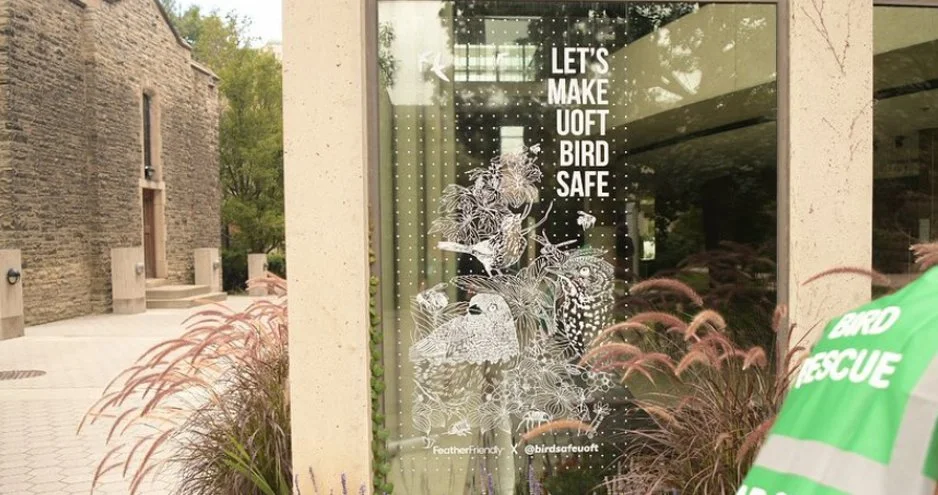
There are many ways to make your workplace safer for birds! Visit birdsafe.ca for everything you need to know about bird-safe best practices.
Learn how FLAP Canada can support you in making your workplace bird-safe
-
If birds are colliding with the building(s) where you work, contact your building owner or property/facilities manager to let them know.
As an employee or tenant of the building, you can help with night-time collision prevention by turning off lights at night except for those necessary for safety.
Some tenants have chosen to pursue daytime cleaning. Use a desk lamp at your work station when working into the evening hours, and keep blinds and/or curtains closed. During the day, keep blinds and/or curtains slightly closed and move interior plants away from glass.
You can also encourage your building owner or property manager to seek advice or information from FLAP Canada, bird-safe experts, at 416-366-3527 or email birdsafe@flap.org
-
Collisions with buildings are a leading cause of migratory bird death.
Any human-built structure that incorporates glass or reflective building material into the design can be the site of bird collisions during the day; including, houses, office towers, transit shelters, car windows, greenhouses, solariums, walkways, and any other structures where windows and/or reflective surfaces are present.
At night, transmission towers, monuments, lighthouses, oil rigs – virtually any tall illuminated structure can be responsible for bird deaths.
-
Birds hit windows anywhere there is glass, and glass is everywhere. In Canada alone, glass claims the lives of around 25 million birds every year.
In the United States, that number may be closer to a billion birds lost each year. We can only expect these numbers to increase as our cities grow and our fixation with glass buildings continues, unless we act now.
Learn more about what commerical and institutional buildings can do to protect birds
-
This is Canada’s national standard for bird-friendly building design, providing guidelines to reduce bird collisions with buildings, by addressing building design for both new and existing buildings. New buildings in Toronto do not have to follow this standard as it is voluntary.
Understanding Bird Collisions
-
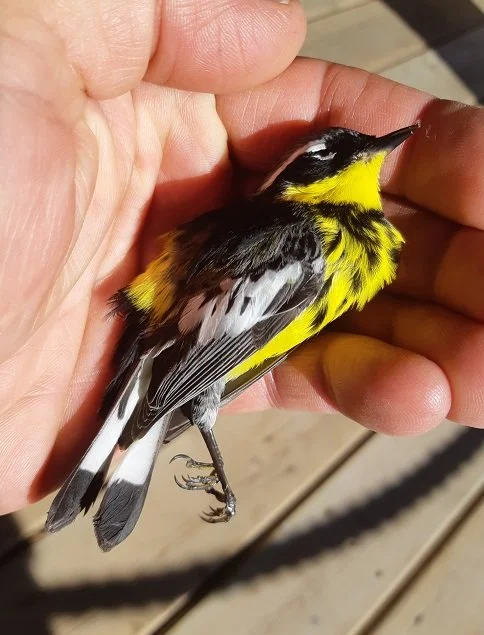
Migratory birds live in forests, meadows or wetlands, and do not understand the concept of glass. To a migratory bird, glass is an invisible and dangerous obstacle. They see the landscape reflected in windows and mirrored building exteriors and mistake the reflection for shelter. Or birds see beyond the glass to interior potted plants or trees inside the building. Where windows meet at the corners, or line up with each other front and back (i.e., glass walkways, solariums, greenhouses) birds perceive clear passage and try to fly through to the trees they see on the other side.
Any reflective or transparent surface used in construction—from glass on bus shelters, to mirrored exteriors on high-rise buildings—can be the site of fatal bird collisions.
-
Most species of songbirds migrate at night. They rely, in part, on the moon and the constellations to guide them along their migration route. The overnight lighting used in dense urban areas confuses migratory birds, and especially on foggy or rainy nights when cloud cover is low. Under these conditions, birds migrate at lower altitudes and are drawn to lights shining from office towers and other structures. Where spotlights are used to illuminate a building, birds fly “into” the beams of light and are reluctant to fly back out into the darkness. Often, they collide with the buildings or drop to the ground from exhaustion.
When day breaks, birds that managed to survive the night-time lighting hazards find themselves trapped in a maze of tall buildings with reflective surfaces. It is extremely difficult for migratory birds to escape this maze without striking windows and building exteriors, often with fatal results.
-
Birds hit windows anywhere there is glass, and glass is everywhere. In Canada alone, glass claims the lives of around 25 million birds every year. In the United States, that number may be closer to a billion birds lost every year. We can only expect these numbers to increase as our cities grow and our fixation with glass buildings continues, unless we act now.
-
The onset of both spring and fall migration can fluctuate mildly each year. Generally, in the Great Lakes area, spring migration begins in mid-March and continues until the beginning of June. Fall migration in this area begins in early August and continues until mid-November.
FLAP Canada offers a special migration alert service for property managers in commercial and institutional sectors.
-
Collisions with buildings are a leading cause of migratory bird death. Any human-built structure that incorporates glass or reflective building material into the design can be the site of bird collisions during the day; including, houses, office towers, transit shelters, car windows, greenhouses, solariums, walkways, and any other structures where windows and/or reflective surfaces are present. At night, transmission towers, monuments, lighthouses, oil rigs – virtually any tall illuminated structure can be responsible for bird deaths.
-
The number of bird fatalities due to collisions with wind turbines sits well below the number of bird fatalities from collisions with buildings; however, as more wind turbines are built, more birds are killed by them.
The National Wind Coordinating Collaborative recognizes two types of impact on birds at wind facilities: direct mortality from collisions, and indirect impact from habitat disruption, habitat avoidance, habitat abandonment and the changes in instinctive bird behaviours due to the presence of wind turbines.
Most of the bird fatalities are songbirds, but raptors are also killed when wind turbines are erected in open areas where these birds hunt for prey.
-
Yes, birds matter. Birds provide a critical link in native ecosystems. They pollinate plants, distribute seeds, and eat billions of insects every year. These behaviors help to maintain fertile agricultural land, healthy wetlands and lush forests. Birds play a vital role in the ecological and biological interdependent processes that are essential to life itself.
Birds also provide an accessible connection to the natural world, especially for urbanites. It is hard to imagine a day without the rejuvenating sound of bird song. Their beautiful bird song, remarkable feathers and interesting flight patterns immeasurably enrich our lives, inspiring design, architecture, culture, art, music and poetry.
Equally important is the contribution birding is to local economies. The last survey, carried out by Statistics Canada, on behalf of the Canadian Wildlife Service, indicated 14.5 million Canadians participated in wild-life-related recreation activities. In a 2011 US Fish and Wildlife survey on birding in the United States, 71.8 million birders spent $17.3 billion on trip expenditures and $27.2 billion on equipment.
-
Birds can collide with windows all year round, but we find that collision rates are much higher in North America during the Spring and Fall migration seasons when birds are moving through an area.
-
There is not enough data to correctly determine an answer to this question, but we do know that the more structures that are built without birds in mind, the more window collisions we will see. -
Report bird collisions on the Global Bird Collision Mapper, birdmapper.org.
-
Toronto is right in the way of two major migratory flyways, so many birds move through our city to go north. That being said, while Toronto tends to have high collision rates, FLAP Canada also has over 30 years’ worth of data collision in Toronto that other cities do not have.
-
Toronto is situated right in two major migratory flyways, which are the paths that birds typically follow to migrate north and south throughout the year. Due to this, birds are often concentrated in the great lakes area, which causes a massive increase in bird movement in spring and fall. More birds in an area with a lot of un-safe structures, tends to mean more collisions.
Volunteering with FLAP
-
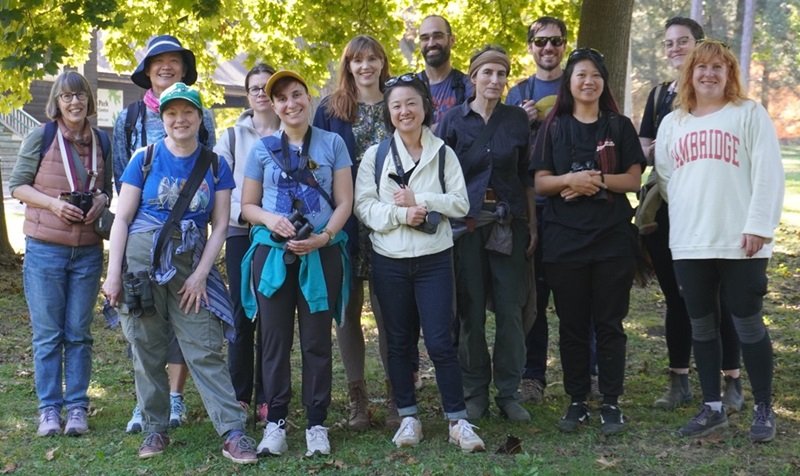
Thank you for considering a rewarding volunteer opportunity that helps keep migratory birds safe!
We rely on volunteers for many tasks, including event support; in-field bird rescue patrols; driving injured birds to wildlife rehabilitation centres; writing services; fundraising campaigns; translation; database; and, office work, to name a few roles.
-
Yes, you will get training as a volunteer. The extent of training depends on your assignment with FLAP Canada.
-
The risk of contracting West Nile Virus from birds is low.
The best way to protect against West Nile Virus is to protect against mosquitoes. Bites from infected mosquitoes are the main transmission route of West Nile Virus to humans. Even then, the chances of you becoming extremely ill from the bite of an infected mosquito are extremely small: less than 1%.
You can always use gloves when handling live or dead birds, and follow-up with thorough hand washing or the use of hand sanitizer. This is simply good practice whenever handling birds or any other wildlife or unknown plant material or matter the bird may have been exposed to.
However, please note that latex gloves are not recommended for handling live birds as it makes them harder to handle and can damage their feathers.
For information and up-to-date facts about West Nile Virus, visit Public Health Agency of Canada.
-
Avian Flu infections in humans are almost all traceable to direct contact with infected poultry, surfaces contaminated by poultry, or consumption of infected poultry. Those infected have most often been working in close contact with infected poultry in unsanitary conditions.
Injured or dead birds found around buildings most likely did not succumb to Avian Flu or any other infectious diseases and pose no threat to humans.
For information and up-to-date facts about human health, visit Health Canada.
-
That would be awesome!
-
The Global Bird Collision Mapper(GBCM) is an online geo-mapping tool designed for registered users to report the locations of bird-building collisions across the globe. You can enter these records from your laptop, tablet, or mobile device.
For specific questions about how to use the GBCM, check out our answers to all your frequent questions.
-
Yes! FLAP Canada runs a school program called Birds in Your Hood, which brings the beauty of birds into the classroom (and outside – with a bird walk!) while teaching the students the value of the birds around them, and how we all can keep them safe.
About FLAP Canada
-
Yes, FLAP Canada is a registered Canadian charity with a Board of Directors.
The Board directors bring a variety of talents, experiences and expertise to the governance of FLAP Canada, and meet monthly to provide oversight for effective organizational management.
-
Our volunteer board service offers an excellent opportunity to contribute to our cause, while sharing your expertise, talent and ideas for governance, revenue generation, research and administration
Learn more about applying to be a part of our Board of Directors
-
FLAP Canada is a registered Canadian charity (No. 14074 6736 RR0001) funded by individuals, foundations, corporations, and various levels of government.
-
Your donation directly supports the underpinnings of FLAP Canada’s mission, including public awareness and education campaigns (residential and commercial), in-field volunteer patrols and bird rescue, and lobbying and public advocacy, to name a few. It also includes fundraising and administration costs.
For more details, our annual financial statements are posted online in the Canada Revenue Agency Directory listing.
-
Please call (416) 366-4527 or email flap@flap.org to inquire about specific designation.
You may also designate monthly giving, tribute gifts, gifts in memoriam or planned gift giving.
-
Thank you for your generous offer to support us!
You can securely donate online now
Alternatively, you may send a cheque or money order, made payable to FLAP (Fatal Light Awareness Program) Canada (or FLAP Canada), c/o Box 430, 31 Adelaide Street East, Toronto, Ontario, M5C 2J5.
Or call us at (416) 366-4527 (FLAP) or email flap@flap.org