
How to enjoy birds and keep them safe your cottage or second home
By Brendon Samuels, FLAP’s BirdSafe BuiIdings Coordinator
Highlights
Birds collide with glass more frequently on buildings near bird habitats, including residential buildings in rural areas;
Cottage and second home designs are using increasing amounts of glass for windows and railings;
Solutions for new construction and retrofits can reduce collisions;
For injured birds, contact a wildlife rehabilitation centre for advice;
Help reduce collisions by sharing FLAP’s free educational postcards with local nature groups, libraries and cottage associations.
Watch our recorded webinar for more information about enjoying birds safely near cottages and second homes
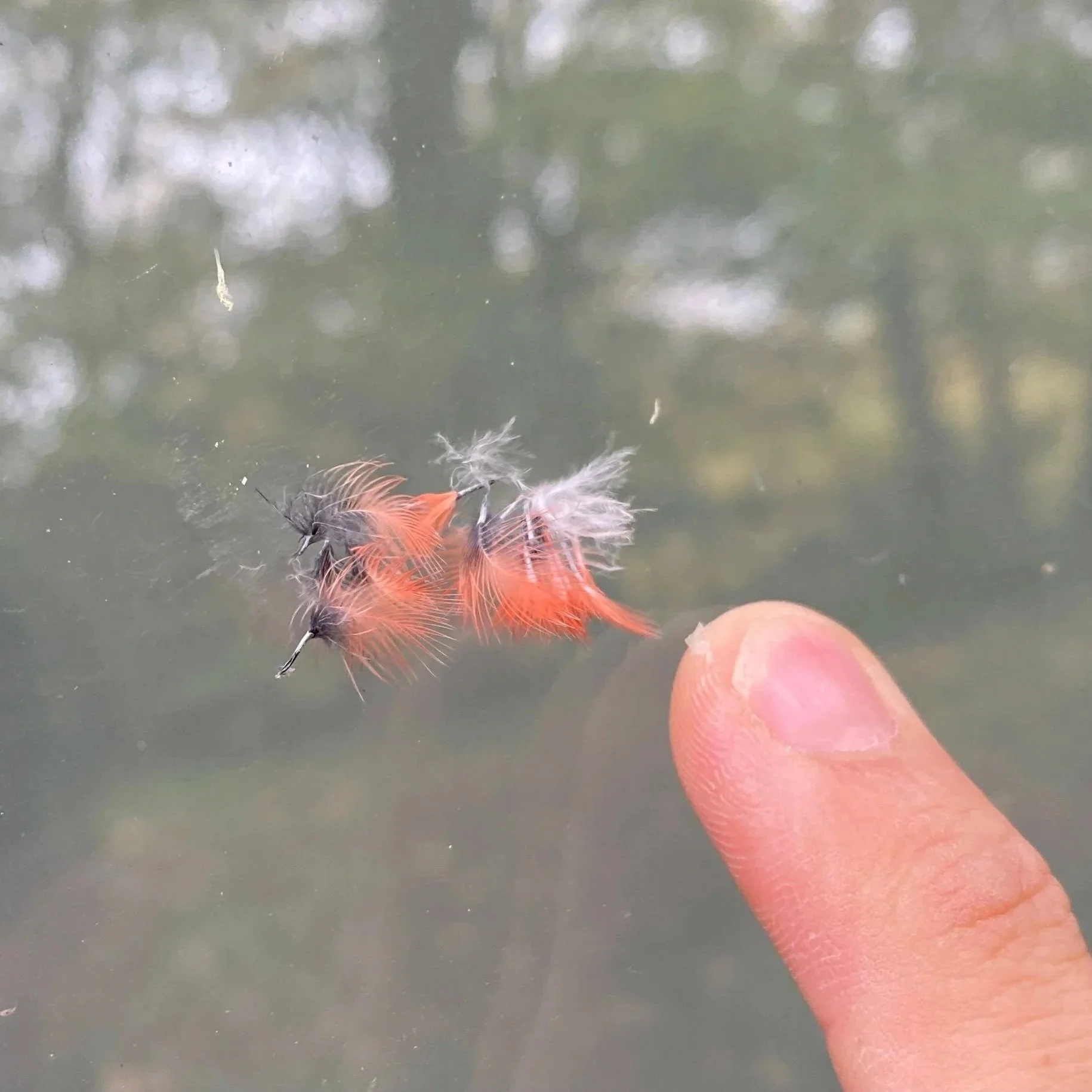
Finding feathers attached to a window is a tell-tale sign a bird has collided in that spot.
Like trees falling in the forest, if there’s nobody around to hear a crash, bird collisions often go unnoticed. This is especially common where buildings are only occupied part of the time, such as cottages and second homes where people visit only occasionally for vacation.
Collisions with glass tend to be underestimated. If you have experienced a thud, or noticed signs of a collision after-the-fact (like a bird or feathers left behind) then odds are that collisions will continue to happen again in that spot, whether detected or not – unless you take action.
Illusions in nature: glass as an invisible threat
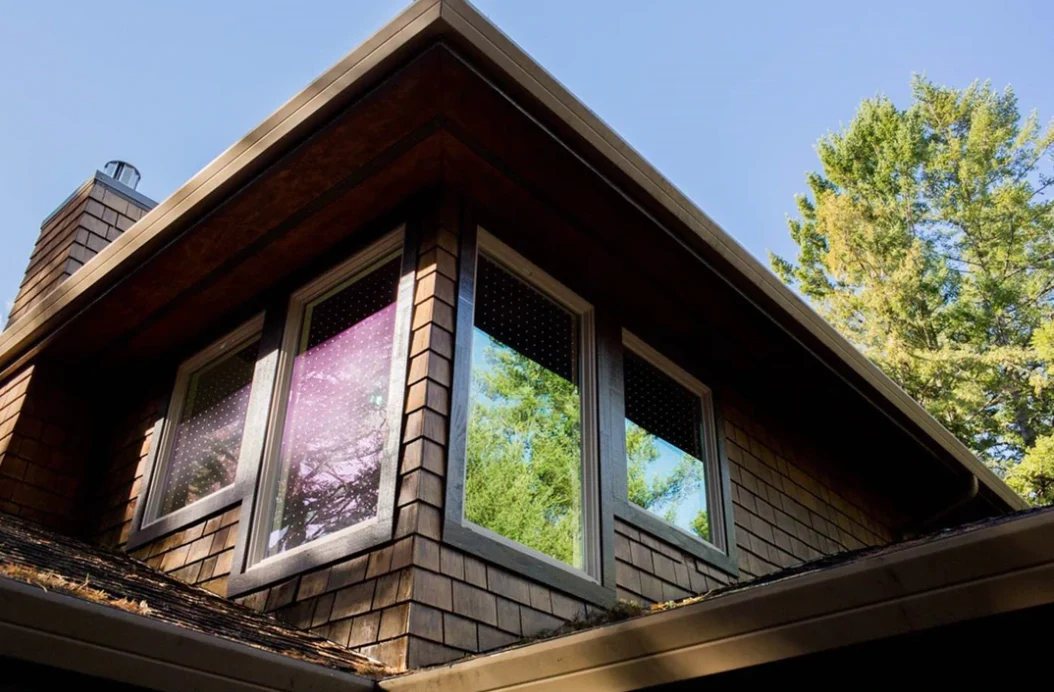
People usually visit a cottage or second home out of a desire to connect with nature. It is therefore no surprise that the architectural design of cottages and second homes caters to this desire: by providing clear views of the outdoors from inside through large windows, and by creating the appearance of buildings integrated into the landscape. When the outside of a cottage or second home is covered with reflective glass, it becomes a visual extension of a nearby forest or lake.
This is precisely where the danger for birds comes from. Birds do not understand reflections on glass and struggle to distinguish between reflected images of habitat or open space, and the real thing. This struggle is not unique to birds: other animals found in rural areas may be similarly confused by reflections, which can trigger territorial aggression. For example, animals like deer and moose and bears have been known to charge at glass when they see their reflection and mistake it for an intruder in their territory.
Because cottages and second homes are often surrounded by bird habitat, there is a greater likelihood of birds being present in higher abundance, and attractive scenes being reflected off glass.
Solutions for cottages and second homes
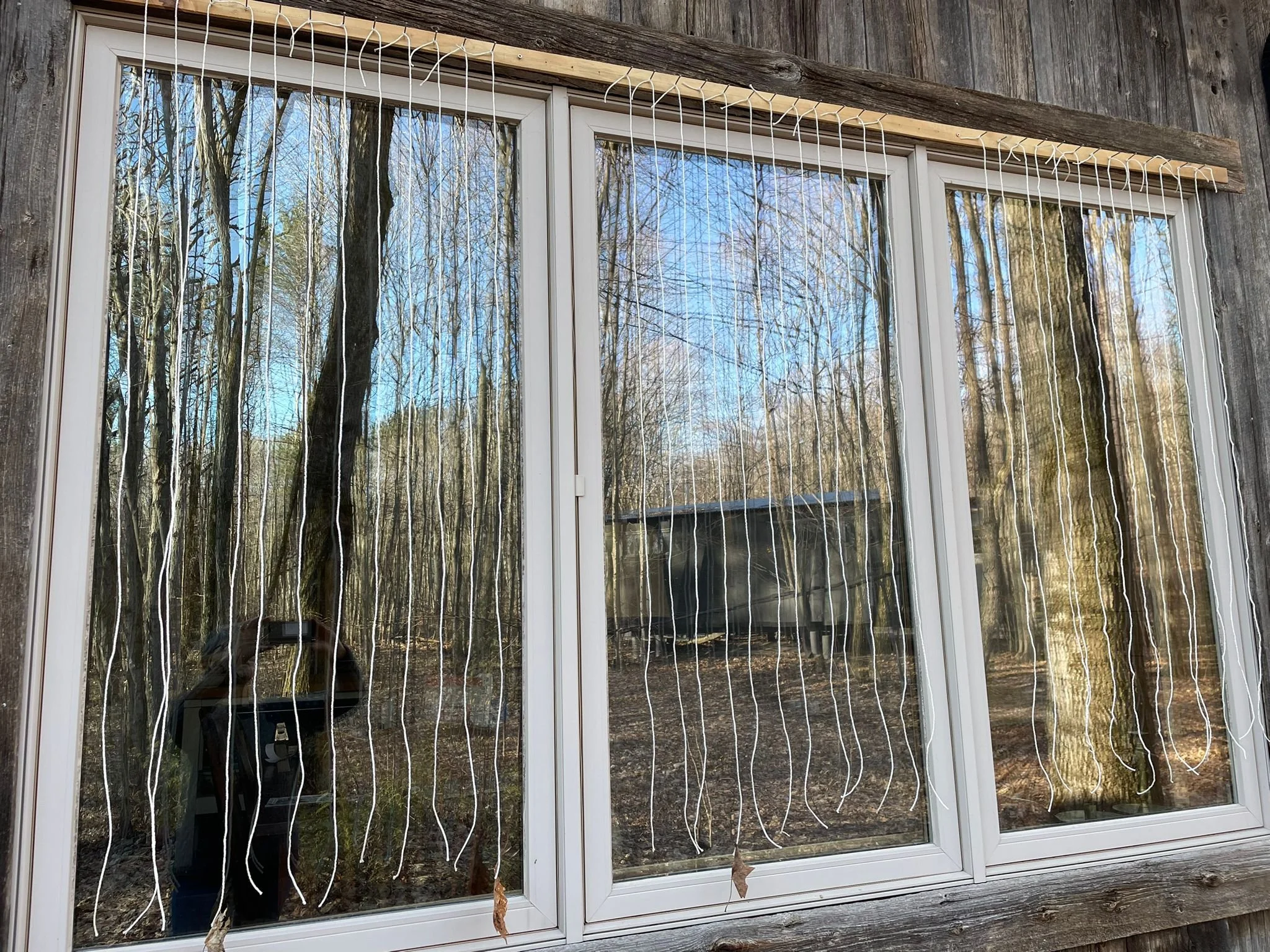
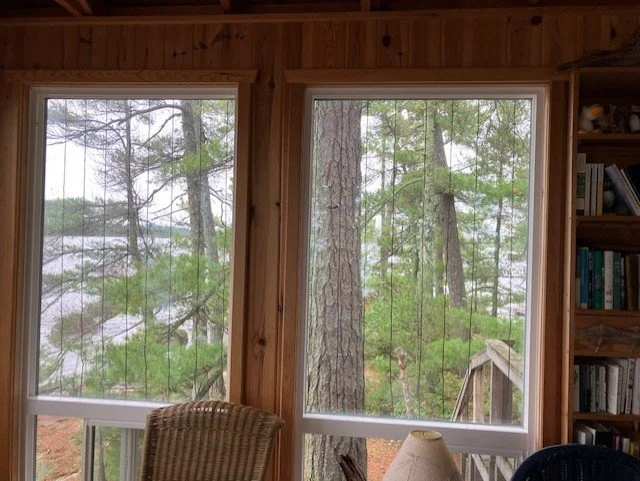
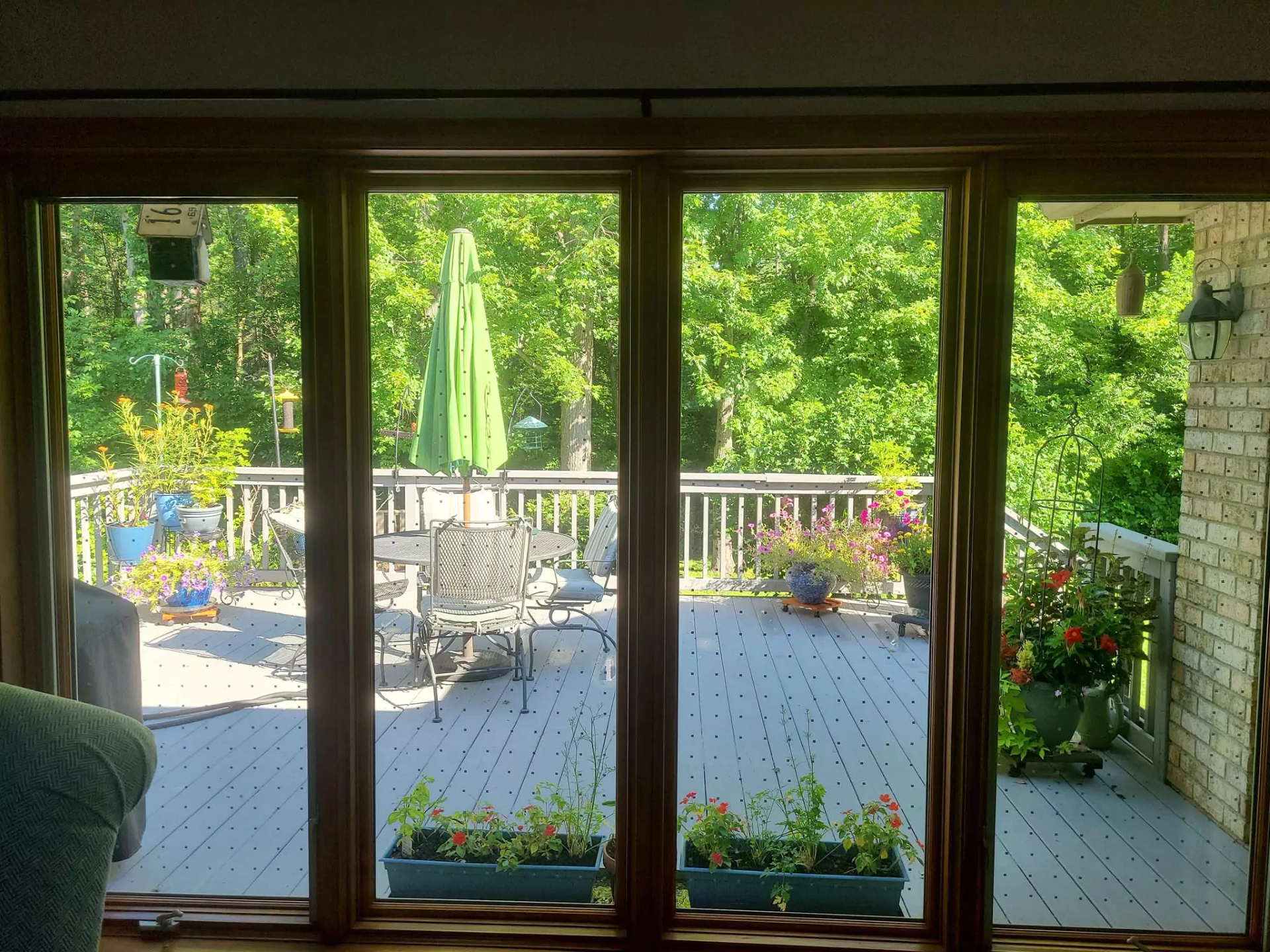
In general, all solutions must be applied on the exterior (outside) of windows in order to be effective. For glass that appears transparent, such as a railing, marking the interior may be more appropriate. Check FLAP’s guidelines for details.
Glass treatments include:
Feather Friendly film or DIY tape
Drawing on glass with a paint marker
Acopian BirdSavers
Structural solutions can include:
Boarding up windows during winter
Exterior shutters, shades when kept closed
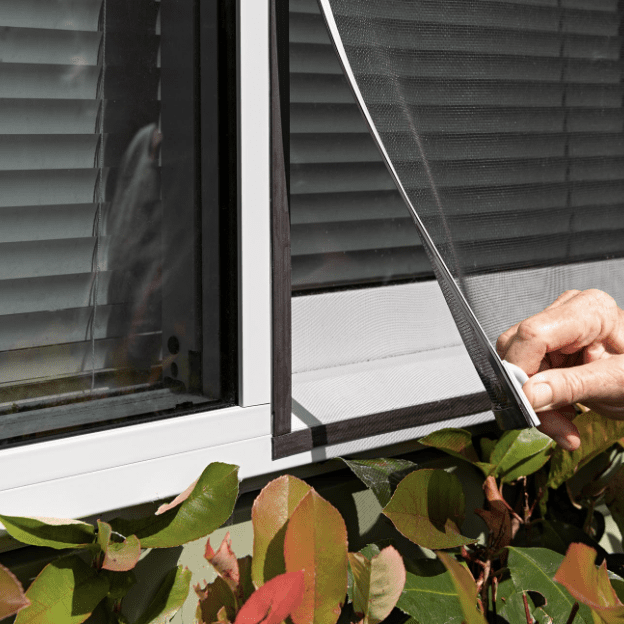
Insect screens if applied on the exterior of the window
Consider alternatives to glass for railings on decks and balconies
If you find a bird, here’s what to do
Birds are often injured after a collision and may require urgent veterinary care. Common injuries may be invisible, such as internal bleeding and fractures. Just because a bird can fly away does not mean it is healthy. After a collision, attempt to contain the bird and place it inside a warm, darkened space, such as a lined cardbo
It is recommended to contact a wildlife rehabilitation centre for advice before taking any actions with an injured bird. A list of wildlife rehabilitation facilities in Ontario can be found here.
For American facilities, visit Animal Help Now.
Cottages and second homes are often located in remote, rural areas. If there are no rehabilitation facilities near you, consider reaching out to the nearest municipality for advice. They may have access to resources dedicated to animal care, such as a humane society or animal control staff.